Guest post by Margaret Ferguson, founder of Beyond The Chair:
Earlier this year, Aesthetics Research Lab launched their project, The History of Aesthetics, to sharpen our understanding of the practice and application of aesthetics in our everyday lives. Explaining the history of aesthetics is deeply important to understanding the philosophical concepts that drive our aesthetic decisions and eventually create the landscape of our aesthetic history. Aesthetic history, as I am using it, traces our movements, creating a history around our aesthetic decisions. In this essay, I will show how ads and fashion reveal issues of the day with food becoming a luxury and how our current aesthetic history is inspired by and shares similarities to past aesthetics.
In May 2024, the latest internet trend emerged from the 2024 Met Gala called “The Digital Guillotine,” a phenomenon that has captivated and challenged celebrity culture. The Digital Guillotine is an online trend where the general public has been blocking celebrities who have been silent about the ongoing humanitarian crisis in Gaza. Ironically, the movement gets its name from Haley Kalil’s “Let Them Eat Cake” Met Gala TikTok video—a true ode to Marie Antoinette and the wealth disparities of 18th-century France. Many outlets have reported that the May 2024 Met Gala was born from an exodus of celebrity idolization due to the mass display of excess wealth. However, I think Haley Kalil’s video was just the icing on top of the cake that started this movement.
If we follow the aesthetic trends of the past few months and understand their significance in relation to 18th-century France, we can develop a greater sense of understanding of our position in history as Western culture shifts away from celebrity idolatry. Whenever I notice new trends arise in our digital landscape, our aesthetic understanding helps provide greater context. The prominence of our viral digital culture, which enables online platforms to rise and fall swiftly, translates into our contemporary attitudes around our aesthetics. In Herbert Marcuse’s aesthetic essay “Nature and Revolution,” he begins by claiming, “…nature is a historical entity: man encounters nature as transformed by society, subjected to a specific rationality which became, to an ever-increasing extent, technological, instrumentalist rationality, bent to the requirements of capitalism.” Marcuse explains that the rationality of one’s nature brings out one’s primary drive in accord with the shifting of the market. Therefore, if a societal shift occurs, this relates to the primary drive of one’s nature, meaning if society is turning on celebrity culture, this should be unsurprising if there is economic instability. This is the case today, especially when you look at the aesthetics of food, which has become a high-fashion commodity in the last year.
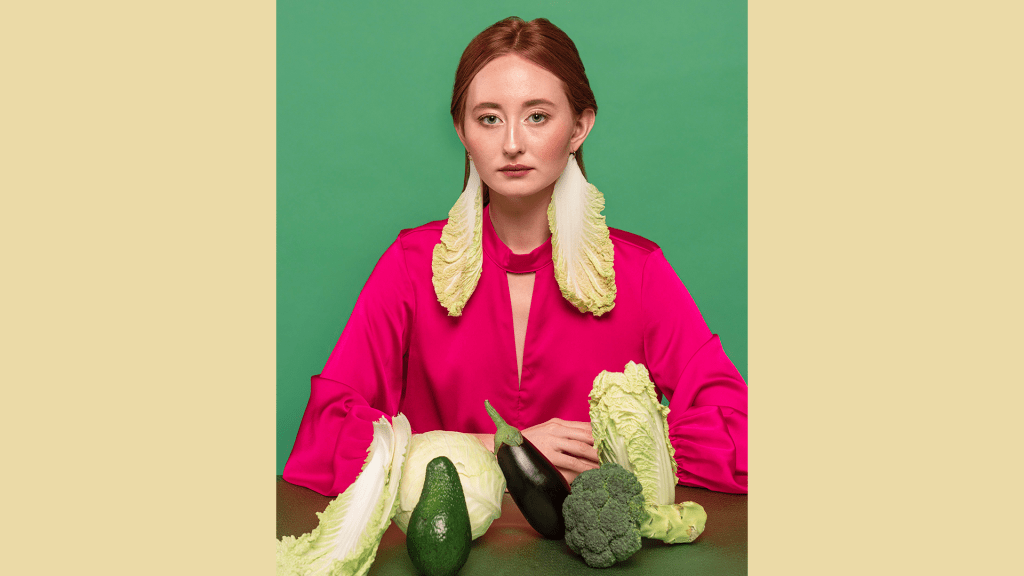
In December 2023, Balenciaga’s Fall 2024 show displayed Erewhon grocery bags as a major fashion trend. Many debated whether the runway show was satirical or serious, but within the following months, it could be understood that, in all seriousness, groceries were becoming a luxury item. The aesthetics of food as fashion are a byproduct of COVID-19 and the destabilization of the European breadbasket with the war in Ukraine. As the Philosophers of Food Project explains, food insecurity arises during economic crises, poor governance, and poor agricultural infrastructure, usually resulting in people eating less food, selling assets, and being less likely to seek healthcare and education. The food insecurity of the past few years created the soft luxury of groceries in the millennial and Gen Z demographics. Furthermore, in Spring 2024, hosting dinner parties has become a growing trend, emphasizing the status symbol of being able to feed large groups of people.
According to Death to Stock (DTS), the label of luxury seems to be changing for Gen Z audiences who are valuing everyday experiences over high-end items; however, the trend is happening simultaneously as food insecurity is rising. Over the course of the year, local communities have been discussing how their grocery bills have become unaffordable and how many are living paycheck to paycheck to survive. Most communities cannot afford other luxury expenses; therefore, buying what they enjoy eating at the grocery has become fashionable in our aesthetic landscape. Then, when you add the humanitarian crisis of Gaza to an already volatile situation, this exacerbates negative public reaction to celebrity culture’s poor aesthetic choices and decisions, causing them to retake aesthetic authority.
Food as a status symbol is nothing new but eerily feudalistic in the 21st century. While high-end fashion ad campaigns now display celebrities with an abundance of food as an accessory, this is reminiscent of the age of the 18th-century French Aristocracy, when wealth and excess were also publicly displayed, not to mention bread shortages are what sparked the French Revolution. As Marcuse states, “Aesthetic qualities are essentially nonviolent, nondomineering…—qualities which, in the domain of the arts, and in the repressive use of the term ‘aesthetic’ as pertaining to the sublimated ‘higher culture’ only, are divorced from the social reality and from ‘practice’ as such.” This brings us back to Haley Kalil’s insensitive Met Gala jest, which sparked the digital revolution we witnessed in early May, with fans attempting to undo this repression and retake aesthetic control from “subversive forces.”
While Kalil’s video sparked an online movement of the Digital Guillotine, it was not the first step in that direction. The aesthetic decisions and messaging of advertisements can be used as a picture of a culture’s ideology. This is true whenever we look at old ads for skin lighteners and hair straighteners targeted at African American women in the 20th century, and the same is true today when we see a photo of Kim Kardashian carrying a bag of groceries while wearing a brand most will never be able to afford. Ad campaigns are a great way to track our aesthetic history in today’s society, and by doing so, we can currently see that our contemporary aesthetic choices highlight wealth disparity and income inequality in the West, which will become a part of our aesthetic history in the future.
To me, the viral digital culture has the aesthetic of being on an extreme coaster ride while participating in a hot dog eating contest. Bulk and speed inherent in trending assume the role of defining what’s palatable and an expedient way to judge right from wrong. I’m just not so sure it’s all working so well for us. I, too, cringe at the atrocities of war and grotesque over-consumption, but I’m not so sure the Digital Guillotine succeeds in creating a more palatable, equitable and beautiful world. I would love to see digital culture grow less reactive and become less trend oriented. More engaged in the nuances of individuals and their life experiences. That to me would be so much more powerful than the hype digital culture is currently famous for.
LikeLike